
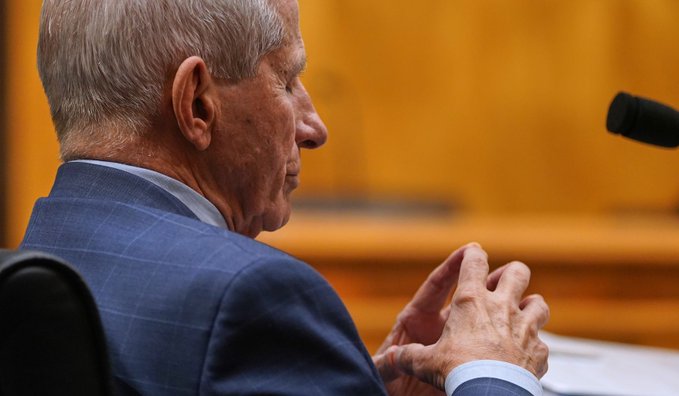
Newly released text messages from Dr. Anthony Fauci’s government phone reveal that top U.S. health officials privately discussed a theoretical risk of miscarriage during early pregnancy as COVID-19 vaccines were first being distributed in 2021.
Republican Sens. Ron Johnson and Rand Paul released the messages after obtaining more than 34,000 texts and hundreds of voicemails from Fauci’s government-issued phone.
In a January 2021 exchange with then-CDC Director Dr. Rochelle Walensky and Surgeon General Dr. Vivek Murthy, Fauci raised the possibility that reactions following a second vaccine dose—including fever and immune-system responses—could theoretically be associated with miscarriage during the first trimester.
Walensky responded that it was a point worth considering, while Murthy also acknowledged Fauci’s concern.
The messages came during a period when clinical data involving pregnant women remained limited. Pregnant women had been excluded from the original COVID-19 vaccine clinical trials.
Days later, Fauci publicly said more than 10,000 pregnant women had received COVID vaccines and that federal monitoring had detected “no red flags.” The newly released messages have prompted criticism from lawmakers who argue the public should have known more about officials’ private discussions.
However, the messages do not show that Fauci or other officials had evidence that COVID vaccines caused miscarriages. They document officials discussing a possible theoretical risk while weighing limited early data.
Later research involving much larger populations found no increased miscarriage risk associated with COVID-19 vaccination. A systematic review reached that conclusion, and the CDC currently says studies involving more than one million vaccinated pregnant women have found no increased risk of miscarriage, stillbirth, premature delivery or birth defects.
The texts therefore provide a revealing look at how uncertain the evidence was during the earliest days of the vaccine rollout—and how federal health officials privately debated those uncertainties before more extensive safety data became available.









Add comment