
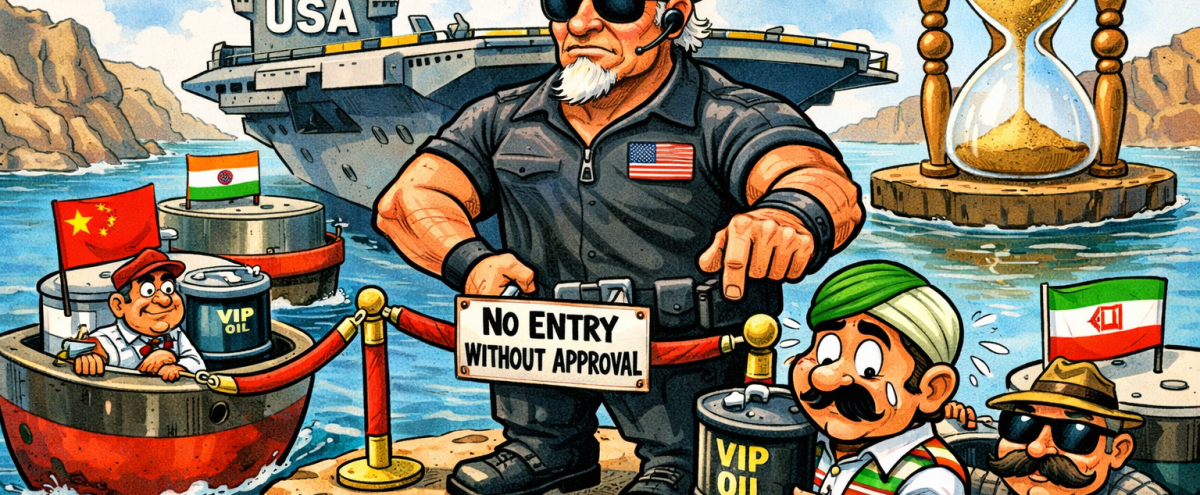
The recent high-stakes standoff between the United States and Iran marks a defining moment in modern geopolitical strategy. What unfolded during the 21-hour negotiation session was not simply another failed diplomatic effort—it was the transition from negotiation to ultimatum. The Trump administration has made it clear that the era of incremental diplomacy has ended, replacing it with a decisive strategy built on economic dominance and maritime control.
At the center of this shift is a simple but uncompromising demand: Iran must fully abandon its nuclear ambitions or face unprecedented economic isolation. This is not a continuation of past policies but a recalibration of how power is projected in the modern world.
A 21-Hour Turning Point
The marathon negotiations served a clear purpose. By engaging in prolonged discussions, U.S. officials demonstrated to the international community that every diplomatic avenue had been explored. However, the outcome was not compromise—it was clarity.
Vice President JD Vance’s statement following the talks underscored this new direction. The United States presented what it called its “final and best offer,” signaling that further negotiations would not dilute its position. The focus remains on one objective that has challenged multiple administrations: the complete dismantling of Iran’s nuclear program.
The Shift from Bombs to Blockades
One of the most notable aspects of this strategy is the move away from traditional military action. Instead of immediate airstrikes, the administration is leaning heavily on maritime power. This approach reflects a broader understanding that economic pressure can be more effective than kinetic force.
A naval blockade offers flexibility that bombing campaigns cannot. Airstrikes deliver immediate destruction but leave little room for adjustment. A blockade, on the other hand, can be tightened or relaxed in real time, allowing the United States to maintain continuous leverage over Iran’s economy.
This method mirrors earlier strategies used in other regions, where restricting access to critical resources proved more effective than direct military confrontation. By targeting Iran’s oil exports, the U.S. aims to weaken the regime without triggering widespread destruction that could rally domestic support within Iran.
Control of the Strait of Hormuz
The presence of the USS Gerald R. Ford and USS Abraham Lincoln in the Persian Gulf is a clear signal of intent. These deployments are not symbolic—they represent the capability to control one of the most critical waterways in the world.
The Strait of Hormuz serves as a vital artery for global energy supplies. By positioning naval forces in this region, the United States effectively becomes the gatekeeper of oil shipments. This level of control introduces a new dynamic, where access to international markets may depend on U.S. approval rather than regional stability.
The ability to monitor and potentially restrict ship movements gives the U.S. a strategic advantage that extends far beyond Iran. It creates leverage over any nation reliant on energy flows through this corridor.
Kharg Island: The Economic Choke Point
A key element of the strategy involves Kharg Island, the hub through which the majority of Iran’s oil exports pass. Rather than destroying this infrastructure, the U.S. is considering the possibility of controlling it.
This approach reflects a broader shift in military thinking. Instead of eliminating assets, the focus is on controlling them. By maintaining the functionality of Kharg Island while restricting access, the United States could exert direct influence over Iran’s economic lifeline.
Such a move would not only disrupt oil revenues but also provide leverage in negotiations related to Iran’s nuclear materials. Control over economic resources becomes a tool for achieving strategic objectives without widespread destruction.
Global Implications for Energy Markets
The ripple effects of this strategy extend well beyond the Middle East. Countries like China and India, which rely heavily on Iranian oil, are now faced with a difficult choice. They must either comply with U.S. restrictions or risk disruptions to their energy supply.
This creates a secondary layer of pressure. By targeting Iran’s exports, the United States indirectly influences the policies of other major economies. The result is a broader geopolitical impact that reshapes alliances and economic relationships.
Energy security becomes a central issue, forcing nations to reconsider their dependencies and strategies. The control of oil flows is no longer just a regional concern—it is a global one.
A New Doctrine of Power
The Trump administration’s approach represents a significant evolution in how power is exercised on the world stage. Instead of relying solely on military force, the strategy combines economic pressure, naval dominance, and strategic positioning.
This “strangle and secure” doctrine emphasizes control over critical resources rather than outright destruction. It reflects an understanding that in a globalized economy, influence over trade and energy can be more powerful than traditional military victories.
As tensions continue to rise, the question is no longer whether conflict will occur, but how it will be shaped. The focus has shifted from immediate confrontation to sustained pressure, where the outcome is determined over time rather than in a single decisive moment.
Final Notes
The current standoff between the United States and Iran is more than a regional dispute—it is a test of a new strategic framework. By prioritizing maritime control and economic leverage, the U.S. is redefining how geopolitical conflicts are managed.
As this strategy unfolds, its success will depend on the balance between pressure and restraint. What is clear, however, is that the rules of engagement have changed, and the implications will be felt far beyond the Persian Gulf.





So basically the U.S. is saying, “you can’t pass unless we say so.” I don’t think Russia and China are going to be okay with that.
What stands out to me is the patience required for this strategy. It’s not about quick wins—it’s about sustained pressure over time.
This feels like a high-stakes gamble. If it works, it could force Iran into compliance without a war. If it fails, it could trigger exactly the kind of conflict it’s trying to avoid. The margin for error here seems very thin.
The focus on Kharg Island is fascinating. Instead of destroying infrastructure, the idea of controlling it shows a smarter use of leverage. That’s a major evolution from past wars where destruction was the goal. Control seems to be the new currency of power.
I’m not convinced this ends peacefully. Economic chokeholds sound clean on paper, but they can trigger desperation. When a country feels cornered, it doesn’t always act rationally. This could easily spiral if Iran decides to disrupt shipping lanes instead of backing down.
This strategy feels like a chess move instead of a boxing match. Controlling the flow of oil without firing a shot is a powerful shift. If the U.S. can maintain pressure without escalation, it could redefine how conflicts are handled globally. The real question is whether Iran folds or finds a way to counter economically.