
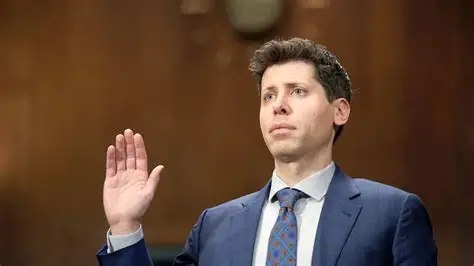
There’s a growing unease in the tech world—and it centers around one man: Sam Altman.
He didn’t just help build artificial intelligence. He helped unleash it. And now, as AI rapidly reshapes industries, economies, and even human behavior, the question isn’t just about what the technology can do—it’s about who’s in control.
Altman sits at the center of that conversation. As the face of OpenAI, he holds influence over tools that millions of people now use every day. That kind of reach is rare. That kind of power is even rarer. And for many, it’s starting to feel uncomfortable.
The Speed of Power
What makes this moment different is speed.
AI hasn’t slowly entered society—it has surged into it. In just a few years, systems have gone from experimental tools to everyday essentials. Businesses rely on them. Students use them. Governments are racing to understand them.
And behind that acceleration is leadership that prioritizes moving fast. Altman has long been known for pushing boundaries, for seeing what’s possible and then making it happen quickly. That’s what built his reputation. It’s also what’s raising concerns.
Because when something moves this fast, oversight struggles to keep up.
The Trust Gap
Trust is the real issue.
It’s not that Altman is widely seen as reckless. In fact, many describe him as thoughtful and strategic. But even within OpenAI, there have been moments where that trust has fractured.
The internal shakeup that briefly removed him as CEO wasn’t just a corporate dispute—it was a signal. Leaders closest to the technology had concerns. Questions about transparency, communication, and decision-making came to the surface.
Even though he returned quickly, the message lingered: if insiders are unsure, what does that mean for everyone else?
When Innovation Becomes Control
AI isn’t like social media or smartphones. It doesn’t just change how people connect—it changes how decisions are made.
From writing content to analyzing data to influencing human behavior, AI is becoming a layer between people and reality. That gives enormous influence to those building it.
And right now, that influence is concentrated.
A handful of companies—and a handful of leaders—are shaping the systems that could define the next era. Altman is one of the most prominent among them.
That raises a difficult question: should anyone have that much control over something this powerful?
The Mission That Changed
OpenAI didn’t start as a traditional company. It began with a mission—to build AI that benefits humanity as a whole.
Over time, that mission has had to coexist with something else: commercialization.
The reality is simple. Building advanced AI requires massive funding, infrastructure, and global partnerships. That brings pressure—pressure to compete, to release products, to stay ahead.
Critics worry that this shift changes incentives. When growth and influence become priorities, does safety take a back seat?
Supporters argue the opposite—that without scale and funding, responsible AI development wouldn’t be possible at all.
The truth likely sits somewhere in between. But the tension is real.
The Bigger Concern
What makes Altman’s position so unique is that he’s not just reacting to the future—he’s actively shaping it.
Every product decision, every release, every partnership pushes AI in a certain direction. And once those systems are widely adopted, they’re hard to pull back.
That’s why the stakes feel so high.
It’s not just about whether Altman can be trusted today. It’s about whether the systems being built now will still serve people years from now—when they’re even more powerful and more embedded in daily life.
What This Means for You
This isn’t just a tech story. It’s a human one.
AI is already influencing how people work, learn, and think. The decisions being made today will shape what opportunities exist tomorrow—and what risks come with them.
Trust, in this case, doesn’t mean blind confidence. It means paying attention. Asking questions. Expecting transparency from the people building the tools we rely on.
Because whether you realize it or not, the future being built right now will affect you.
Final Notes
The rise of Sam Altman isn’t just about one person’s success. It’s about what happens when innovation moves faster than accountability.
He may be a visionary. He may be exactly the kind of leader this moment requires.
But the bigger question remains unanswered—and it’s one that won’t go away anytime soon:
What happens when the person building the future becomes too powerful to question?





Add comment