
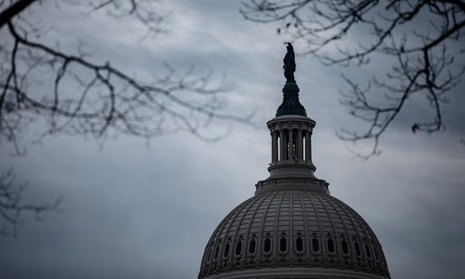
The U.S. House of Representatives has approved a short-term extension of a controversial surveillance program, buying lawmakers just days to resolve a growing conflict over national security and privacy rights.
The measure extends Section 702 of the Foreign Intelligence Surveillance Act (FISA) through April 30, preventing the program from expiring while negotiations continue. The extension passed after lawmakers failed to agree on a longer-term solution, highlighting deep divisions in Congress.
What Is Section 702 and Why It Matters
Section 702 allows U.S. intelligence agencies to monitor communications of foreign individuals located outside the United States. The program is considered a key tool for tracking threats and gathering intelligence.
However, the law has long been controversial. While it targets foreign nationals, it can also collect communications involving Americans who are in contact with those individuals.
Supporters argue the program is critical for national security, helping prevent terrorism and monitor global threats. Critics, however, say it raises serious concerns about privacy and potential government overreach.
Why Congress Could Not Reach a Long-Term Deal
Efforts to renew the program for a longer period failed dramatically. Lawmakers rejected proposals for both a five-year extension and an 18-month renewal backed by Donald Trump.
The failure came from opposition on both sides of the aisle.
“Privacy advocates want stricter safeguards, while security leaders warn against weakening intelligence tools.”
Some lawmakers pushed for reforms requiring warrants before accessing Americans’ data. Others argued such changes would make the program less effective.
The result was a temporary compromise—just 10 days to keep the system running while negotiations continue.
A Late-Night Vote Signals Urgency
The extension came after a dramatic late-night session in Washington. Lawmakers rushed to pass a stopgap measure before the program’s expiration deadline.
The urgency reflects how critical the program is viewed by intelligence agencies. Without action, officials warned of potential gaps in surveillance capabilities.
The bill now moves to the Senate, where lawmakers face a tight timeline to act before the new deadline.
The Ongoing Privacy vs. Security Debate
At the heart of the issue is a familiar tension: how to balance national security with individual privacy.
Critics argue that Section 702 allows “warrantless surveillance,” meaning Americans’ communications can be accessed without a traditional court order.
Privacy advocates have raised concerns for years, pointing to past misuse and lack of transparency. Some lawmakers want stricter oversight, including:
“Warrant requirements for searching Americans’ data”
“Limits on how intelligence agencies use collected information”
On the other side, intelligence officials warn that adding restrictions could weaken the program’s effectiveness and put national security at risk.
What Happens Next
With the temporary extension in place, Congress now has a narrow window to reach a broader agreement.
Possible outcomes include:
“A long-term renewal with new privacy protections”
“A clean extension with minimal changes”
“Another short-term extension if talks stall”
The debate is expected to intensify as the deadline approaches, with pressure mounting from both national security leaders and civil liberties groups.





Add comment