
The war in the Middle East just took another aggressive turn—and this time, the scale is impossible to ignore.
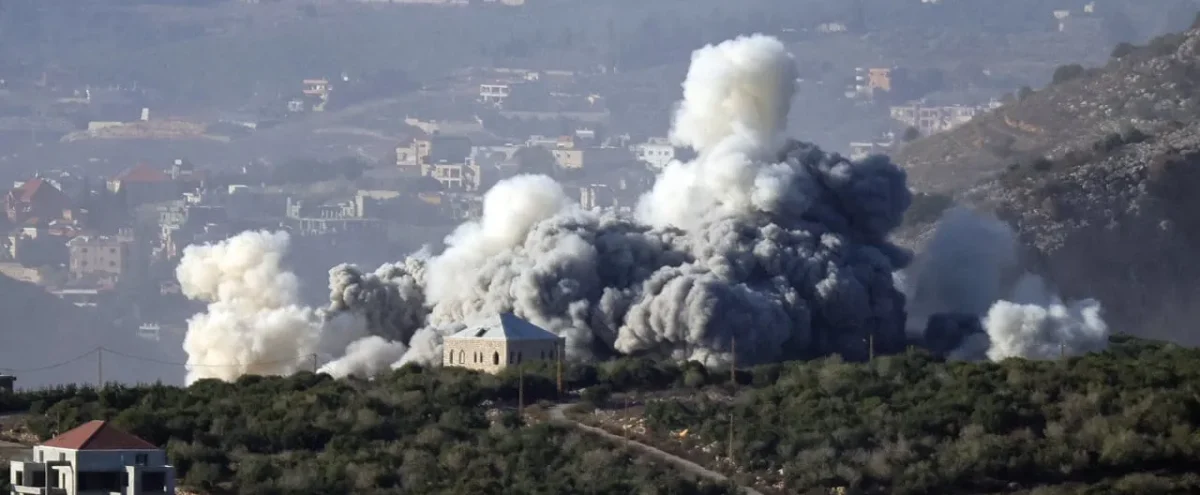
Israel says it has struck more than 200 Hezbollah targets across Lebanon in just 24 hours, marking one of the most intense bursts of military activity in the current conflict.
The message is clear: despite ongoing diplomatic efforts elsewhere, this front of the war is not slowing down.
A Massive Wave of Airstrikes
According to the Israeli military, the strikes targeted Hezbollah infrastructure, including rocket launchers, weapons sites, and operational positions across southern Lebanon and beyond.
Officials say the goal is straightforward—stop attacks before they happen.
Israel claims the strikes are aimed at preventing rocket and drone fire into its territory.
This is not a limited operation. It’s a sustained campaign designed to degrade Hezbollah’s ability to fight.
War Despite a Ceasefire
What makes this escalation even more significant is the timing.
There is currently a ceasefire agreement in place between the United States and Iran—but Israel has made it clear that this ceasefire does not apply to Hezbollah in Lebanon.
That distinction is critical.
It means that while one part of the conflict is cooling down diplomatically, another is heating up militarily. And that split approach is creating confusion—and risk—across the region.
Lebanon Caught in the Middle
The impact on Lebanon has been severe and ongoing.
Recent strikes have hit multiple regions, including southern Lebanon, the Bekaa Valley, and even parts of Beirut. These operations are part of a broader campaign that has already involved hundreds of strikes in a matter of days.
Civilian areas have also been affected, with reports of casualties and widespread damage.
This raises a difficult reality: while the stated targets are military, the battlefield is increasingly overlapping with populated areas.
Hezbollah Still Fighting Back
Despite the intensity of the strikes, Hezbollah is not standing down.
The group has continued launching rockets and drones into northern Israel, keeping pressure on Israeli defenses and maintaining its role in the broader conflict.
This back-and-forth is what makes the situation so volatile.
Each strike invites retaliation. Each retaliation invites escalation. And the cycle continues.
A War Expanding on Multiple Fronts
This latest surge in attacks is not happening in isolation.
It is part of a wider regional conflict involving Iran, Israel, and the United States—one that has already stretched across multiple countries and fronts.
In recent days alone:
“Over 200 targets were hit in a single day”
“Ground forces are operating in southern Lebanon”
That combination of air and ground operations signals something bigger than retaliation. It suggests a coordinated effort to reshape the battlefield.
What This Means for You
Even if you’re thousands of miles away, this matters.
Conflicts like this don’t stay contained. They affect:
Energy markets
Global trade routes
Military alliances
And when escalation happens this quickly, the risk of a wider war increases.
The fact that over 200 targets were struck in just one day shows how fast things can move—and how difficult it becomes to control once they do.
Final Notes
This is no longer a slow-building conflict.
It’s a fast-moving, high-intensity confrontation with multiple players, overlapping strategies, and no clear endpoint.
Israel’s decision to strike more than 200 Hezbollah targets in 24 hours sends a powerful signal:
The war may be shifting—but it’s far from over.





Add comment